Our approach to the Volkswagen T7 Transporter conversion
At CamperKing, our engineering decisions are guided by vehicle integrity, manufacturer alignment, and long‑term structural safety. Recent online discussion across the wider campervan community has prompted questions about why some UK converters remove the B‑pillar roof traverse on the Volkswagen T7 platform, and why CamperKing does not. To provide clarity and reassurance, this document explains our engineering rationale and the manufacturer guidance behind it.
Understanding the B-Pillar roof traverse?
The B‑pillar and its roof traverse (sometimes referred to as the header bow) form a key part of the T7’s safety structure. This component contributes to:
- Body stiffness and torsional rigidity
- Rollover and side‑impact load paths
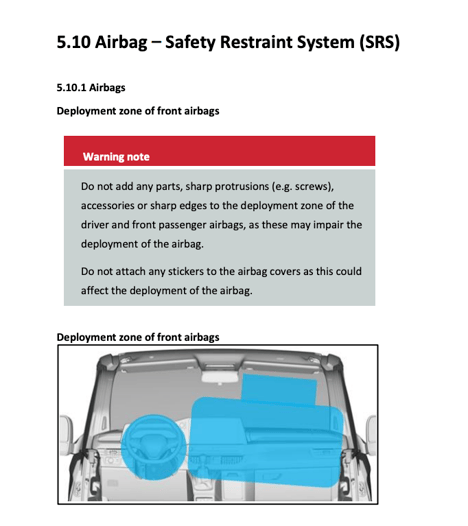
- Restraint‑system and seat‑belt anchorage performance/li>
- The maintenance of the manufacturer’s validated crash structure
Both Volkswagen and Ford (who share this platform across the T7 and the Transit Custom) provide guidance for converters when altering this structural element.
Volkswagen’s 2025 converter guidance states:
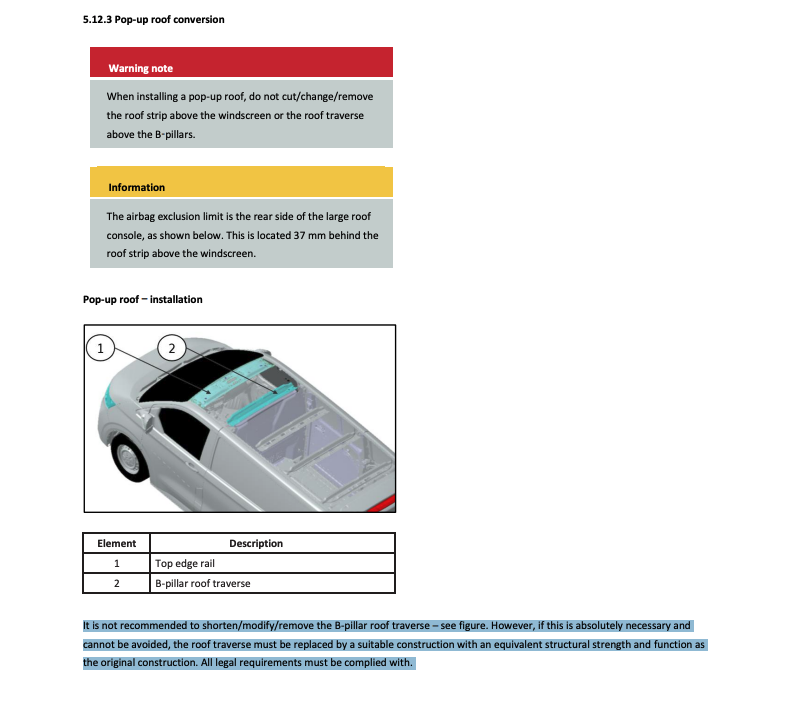
“It is not recommended to shorten, modify or remove the B‑pillar roof traverse… however, if this is absolutely necessary and cannot be avoided, the roof traverse must be replaced by a suitable construction with equivalent structural strength and function as the original construction. All legal requirements must be complied with.”
Ford’s converter guidelines state the following in section 5.12.3 regarding pop‑up roof conversions:
“Warning: When installing a pop-up roof conversion, do not cut/modify/remove the Header Rail above the windscreen or the Roof Bow above the B Pillars.”
Why CamperKing chooses not to remove the traverse
While removal is not prohibited, Volkswagen and Ford both indicate that doing so requires:
- engineering a structurally equivalent replacement
- validating that the replacement maintains the original safety intent
- reassessing crash‑relevant load paths
- confirming regulatory compliance beyond the manufacturer’s own testing
Some converters choose to undertake such structural redesign and revalidation. CamperKing chooses a different, conservative approach.
We retain the manufacturer’s safety structure in full
By working with the unaltered B‑pillar roof traverse, our type‑approved T7 conversions:
- preserve Volkswagen’s and Ford’s crash‑validated geometry
- avoid altering seat‑belt anchorage surroundings
- avoid introducing engineering variables that require revalidation testing
- remain fully within the manufacturer’s intended safety envelope
This is a deliberate engineering decision, not a cost decision. It reflects our focus on structural continuity, regulatory certainty, and long‑term durability.
Our commitment to responsible engineering
Our approach forms part of CamperKing’s broader commitment to:
- conversion standards aligned with manufacturer guidance
- responsible and transparent engineering
- maintaining OEM safety intent
- ensuring customer confidence in the structural integrity of their vehicle.
Confidence when you buy
Every CamperKing type‑approved T7 conversion retains the factory‑engineered B‑pillar roof traverse. This ensures:
- no reinterpretation of OEM crash structures
- no changes to restraint‑system geometry
- full continuity of manufacturer‑validated load paths.
Customers can be assured that our engineering approach prioritises safety, compliance, and long‑term structural integrity.
We do not comment on competitors
We understand that customers compare different conversion methods across the industry. Each converter may have its own validated engineering process. CamperKing does not comment on the safety or engineering practices of other businesses; we can only explain our own rationale, built on OEM guidance and type‑approved standards.
We welcome informed discussion
We are always happy to provide additional technical detail for customers who wish to understand our engineering decisions, regulatory compliance, or the principles behind our T7 conversion approach.
If you have any further questions about our approach or the safety considerations behind it, our team will be pleased to help.